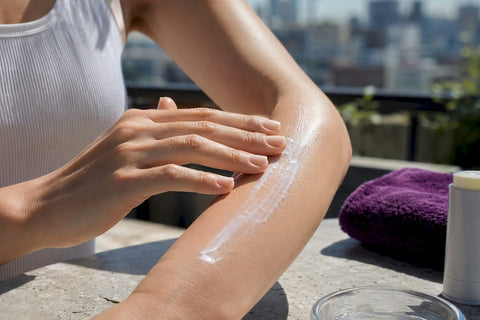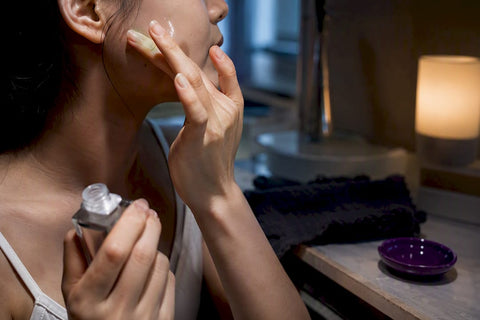
For melasma, a Korean-style routine that prioritizes tranexamic acid–based brightening plus strict daily sunscreen delivers the most reliable, low-irritation improvement. Pair that with niacinamide, alpha-arbutin, vitamin C, or a gentle retinoid, and give it 8 to 16 weeks of daily consistency. Skip a day of sunscreen and you can undo weeks of progress, which makes sun protection the one non-negotiable in this entire routine.
TL;DR:
- Consistent use of tranexamic acid, niacinamide, and stabilized vitamin C derivatives over 8 to 16 weeks, combined with strict daily sunscreen, is essential for melasma improvement.
- Layering actives like alpha-arbutin and retinoids correctly and avoiding irritation are crucial, as negative reactions can worsen pigmentation.
- Topical tranexamic acid in concentrations of 0.5% to 5% effectively reduces hyperpigmentation with minimal irritation, especially when paired with broad-spectrum, tinted sunscreens.
- It is vital to apply sunscreen daily, reapply midday, and avoid heat exposure to prevent triggering melasma flare-ups or deepening existing patches.
- Combining topical treatments with in-office procedures may be necessary if visible improvement does not occur within four months of consistent routine.
Table of Contents
- What Korean Products for Melasma Actually Target
- How Do You Build a Daily Korean Routine for Melasma?
- Which Ingredients Actually Fade Melasma, and How Do They Work Together?
- How Long Does It Take Korean Skincare to Fade Melasma?
- What Safety Precautions Matter Most With Melasma Treatments?
- A Note on Getting This Right
- The Real Problem With Most Melasma Advice
- Build Your Melasma Routine With Lunarashopping
- Sources
- FAQ
What Korean Products for Melasma Actually Target
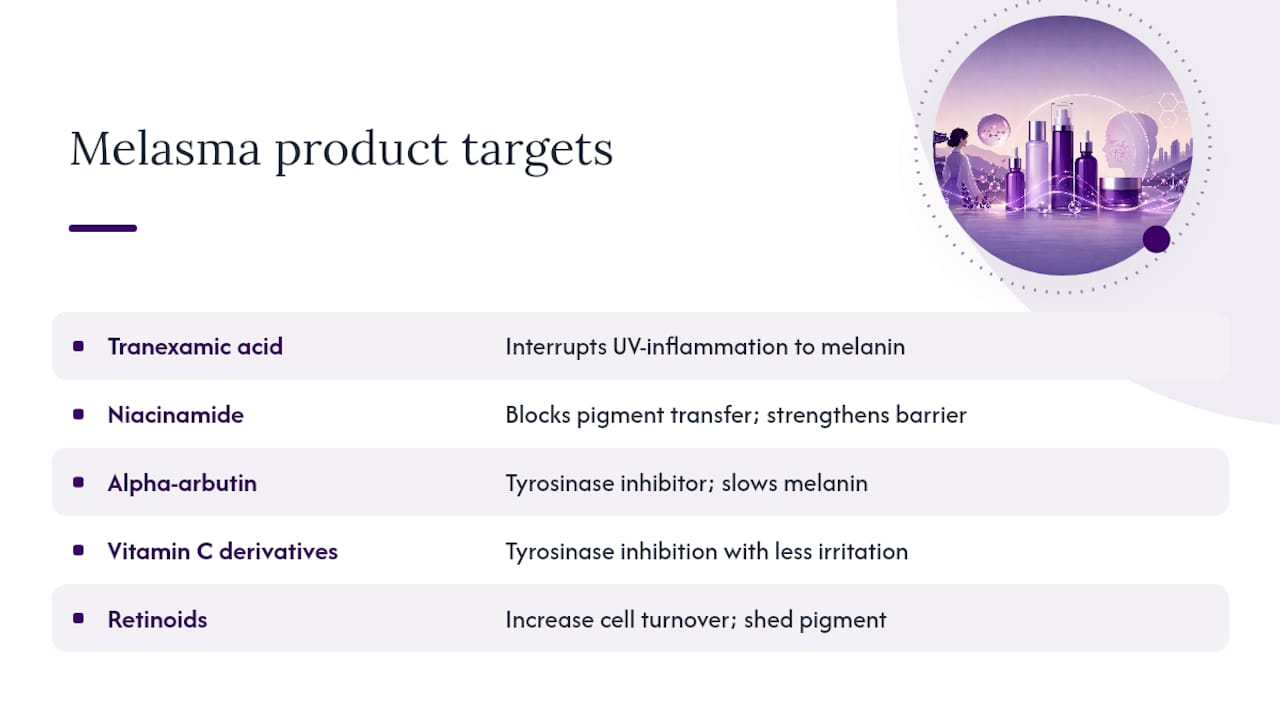
Melasma is not a single dark spot you can spot-treat and forget. It is a chronic pigmentation disorder where melanocytes overproduce pigment in patches, usually across the cheeks, forehead, and upper lip, and it tends to flare with heat, hormones, and UV or even visible light exposure. That is why the Korean approach to treating melasma with Korean products rarely relies on one hero ingredient. Instead, it layers several agents that interrupt the pigmentation process at different points: blocking melanin production, stopping pigment transfer to skin cells, speeding up cell turnover, and shielding skin from the light that triggers new pigment in the first place.
Each product category below plays a specific role in that chain. Understanding the mechanism helps you read an ingredient list and know whether a product is actually built for melasma or just marketed toward “brightening” in a general sense.
Tranexamic acid (TXA) serums and ampoules. TXA interrupts the pathway that links UV-triggered inflammation to melanin production, which is part of why it has become a cornerstone of Korean beauty for dark spots and melasma specifically. Clinical research backs both topical and injectable delivery routes for reducing hyperpigmentation, and topical formulations in consumer products commonly sit between roughly 0.5% and 5%, with clinic-grade or prescription formulas running higher. Look for it in lightweight ampoules or serums layered early in your routine, right after cleansing and toner.
Niacinamide treatments. Niacinamide does not shut down melanin production outright. It blocks the transfer of pigment granules to surface skin cells and strengthens the skin barrier at the same time, which matters because a compromised barrier makes melasma-prone skin more reactive to everything else you put on it. It shows up in nearly every Korean essence and moisturizer for a reason: it is well tolerated even at higher concentrations and pairs easily with almost anything else in your routine.
Alpha-arbutin serums. Arbutin is a tyrosinase inhibitor, meaning it slows the enzyme responsible for producing melanin in the first place. It is gentler than hydroquinone and generally well suited to the kind of daily, long-term use melasma treatment actually requires. You can read more about how Korean brands formulate with arbutin if you want the deeper formulation breakdown.
Vitamin C derivatives. Stabilized forms like sodium ascorbyl phosphate or ascorbyl glucoside show up often in Korean formulations because they inhibit tyrosinase while causing less irritation than pure L-ascorbic acid. For melasma-prone skin, the derivative forms are usually the safer starting point.
Gentle retinoids and retinol alternatives. Retinoids speed up cell turnover, helping push pigmented cells to the surface faster so they shed instead of lingering. Korean formulations often favor encapsulated retinol or bakuchiol-adjacent blends specifically because traditional retinoids can inflame melasma-prone skin and trigger more pigment, not less, if introduced too aggressively.
Azelaic acid treatments. Azelaic acid works on multiple fronts: it inhibits tyrosinase, has mild anti-inflammatory properties, and is often tolerated well by skin that reacts to stronger acids or vitamin C.
Tinted, high-SPF sunscreens. This is the category that makes or breaks every other product on this list. Standard chemical and mineral filters block UVA and UVB, but melasma also responses to visible light, especially blue light from screens and daylight. A tinted sunscreen with iron oxide gives you that extra visible-light coverage that a clear sunscreen cannot.
For sensitive or reactive skin, start with lower concentrations in cream or essence formats rather than potent serums, and reserve stronger actives for spot application rather than full-face use until you know how your skin responds. Lunarashopping’s Face Creams & Moisturizers and Face Toners & Mists collections are useful starting points if you want gentler entry formats, while the All Face Care Products page covers the full range, from ampoules to sunscreen, in one place.
How Do You Build a Daily Korean Routine for Melasma?
A melasma routine succeeds or fails on sequencing. Put the wrong active in the wrong slot, or layer two exfoliating ingredients on the same night, and you risk irritation that can trigger post-inflammatory hyperpigmentation, which looks a lot like melasma getting worse.
Morning routine
- Gentle cleanser. A low-pH gel or foam cleanser removes overnight buildup without stripping the barrier.
- Hydrating toner or essence. This preps skin and adds a light layer of humectants before actives go on.
- Brightening serum or ampoule. This is where tranexamic acid, alpha-arbutin, or a vitamin C derivative goes. Apply to slightly damp skin for better absorption.
- Moisturizer. Look for ceramide or centella-based formulas that support the barrier rather than adding more actives.
- Sunscreen, SPF 50 PA++++. Apply a full teaspoon for the face alone, and reapply midday if you are outdoors. A tinted formula adds visible-light protection that standard sunscreen does not.
Evening routine
- Oil cleanser, followed by a water-based cleanser (the classic Korean double cleanse) to fully remove sunscreen and pollution buildup.
- Hydrating toner.
- Treatment step, alternating by night: niacinamide or TXA on most nights, retinoid or a mild exfoliating acid on designated nights only (see schedule below).
- Spot treatment for stubborn patches, applied directly rather than across the whole face.
- Barrier-repair moisturizer or sleeping mask, ideally with ceramides or panthenol to calm skin overnight.
Weekly schedule for introducing stronger actives
| Night | Active | Notes |
|---|---|---|
| Monday, Wednesday, Friday | Retinoid or retinol alternative | Start once weekly for the first two weeks, then build up |
| Tuesday, Thursday | TXA or niacinamide serum | Safe for nightly use once tolerated |
| Saturday | Gentle exfoliating acid (if used) | Never combine with retinoid the same night |
| Sunday | Rest night, hydration only | Lets the barrier recover |
Pro Tip: Never introduce more than one new active per week. If your skin tolerates TXA and niacinamide together for two weeks with no irritation, add a retinoid once weekly before increasing frequency.
If you notice stinging, flaking, or new dark patches after adding a product, drop back to the hydration-only step for a few nights and reintroduce actives one at a time. That single troubleshooting move solves most of the irritation issues people run into when they try to do too much, too fast, which is the single most common mistake in Korean skincare for hyperpigmentation.
Which Ingredients Actually Fade Melasma, and How Do They Work Together?
Tranexamic acid interrupts the signaling pathway between UV-damaged skin cells and melanocytes, which is why it is considered one of the more targeted options for melasma specifically rather than pigmentation in general. Clinical evidence supports tranexamic acid’s role in reducing hyperpigmentation through both topical and intra-lesional delivery, and it is one of the reasons TXA has become central to so many Korean formulations aimed at treating melasma with Korean products. It also tends to cause less irritation than high-strength vitamin C or hydroquinone, which matters enormously for skin that is already prone to inflammation-triggered pigment. You can dig deeper into dosing and product selection in this guide to tranexamic acid in Korean skincare.
Niacinamide does not touch melanin synthesis directly. It blocks the transfer step, keeping pigment from reaching the surface layers where it becomes visible, and it simultaneously reinforces the skin barrier. That dual action is why it functions best as a supporting player rather than a stand-alone treatment.
Alpha-arbutin and vitamin C derivatives both inhibit tyrosinase, the enzyme that kicks off melanin production, but they come with different irritation profiles. Arbutin is generally the gentler of the two for daily use, while vitamin C, especially in its more potent L-ascorbic acid form, can be more effective but also more likely to cause redness on already-sensitized skin. Choosing a stabilized derivative form is usually the safer trade-off for melasma-prone skin.
Retinoids accelerate cell turnover, pushing pigmented cells toward the surface where they shed faster. This is valuable for melasma, but it is also the ingredient category most likely to cause the exact inflammation that worsens pigmentation if introduced too quickly. Start at once weekly, watch for a full week before increasing frequency, and never combine a retinoid night with an exfoliating acid night.
Azelaic acid offers a milder alternative that inhibits tyrosinase while also calming inflammation, making it a reasonable substitute for people who cannot tolerate stronger acids or retinoids.
A little context on scale: topical TXA concentrations in consumer skincare typically range from about 0.5% to 5%, with the higher end generally reserved for targeted or clinic-dispensed formulas rather than everyday serums. That range gives you a useful benchmark when comparing product labels, since anything wildly outside it is worth a second look.
Here is how the major actives pair, and where you need to space them out:
- TXA + niacinamide: Pairs well; both are low-irritation and can be layered daily.
- TXA + vitamin C: Generally compatible, though sensitive skin may prefer using them at different times of day.
- Retinoid + exfoliating acid: Avoid using on the same night; alternate to prevent over-exfoliation.
- Retinoid + vitamin C: Best used at different times (retinoid at night, vitamin C in the morning) to reduce irritation risk.
- Arbutin + niacinamide: Compatible and commonly formulated together in the same product.
- Azelaic acid + retinoid: Space these on alternating nights rather than combining, since both increase turnover and can compound irritation.
Building your own combination from individual products gives you more control over concentration and pacing than a one-size-fits-all cream, which is part of why so many people treating melasma with Korean products gravitate toward a multi-step routine instead of a single “melasma cream.”
How Long Does It Take Korean Skincare to Fade Melasma?
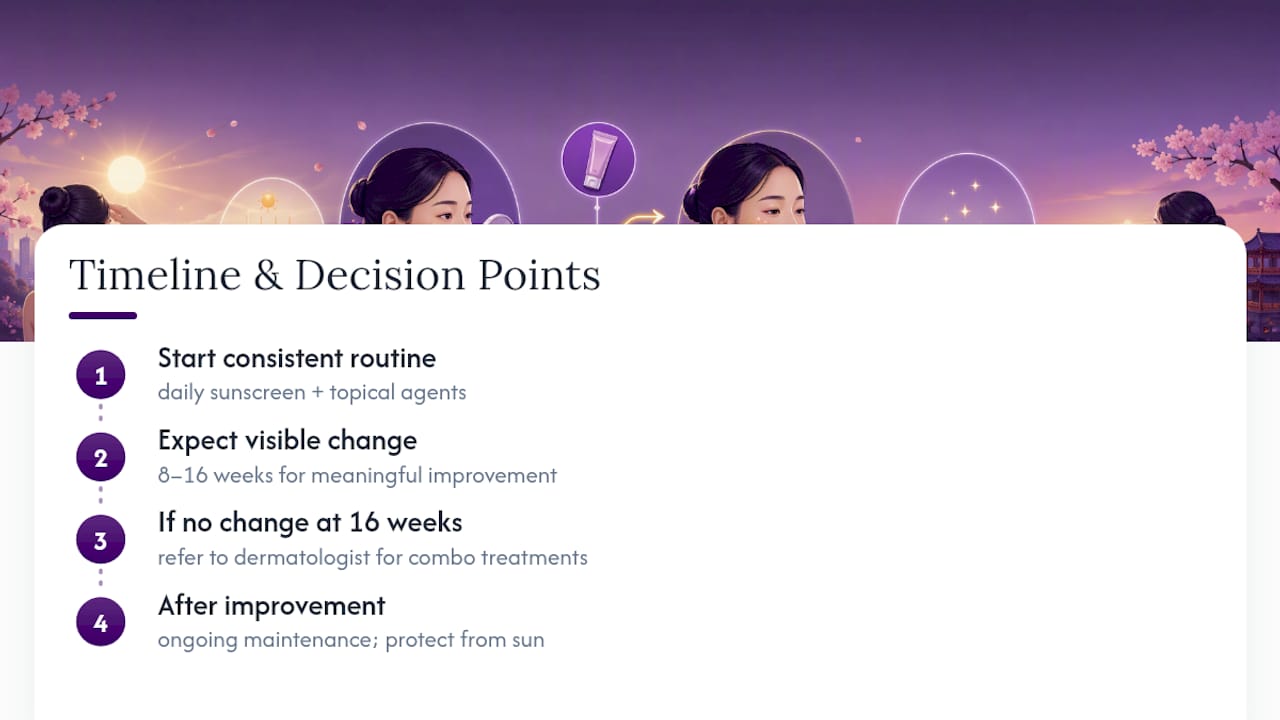
Most topical regimens need 8 to 16 weeks of consistent use before you see a meaningful shift in tone evenness, and that window assumes daily sunscreen with no gaps. “Meaningful improvement” usually looks like softer edges on patches and a more even base tone rather than complete disappearance, since melasma is a chronic condition that responds to management, not a one-time cure.
If you have used a consistent routine, including daily high-protection sunscreen, for a full 16 weeks with no visible change, that is the point to bring in a dermatologist. Clinical evidence supports combining topical agents with in-office procedures for cases that do not respond to topicals alone, and published reviews on melasma treatment consistently find combination approaches outperform any single method. Prescription-strength hydroquinone, chemical peels, or laser toning are the typical next steps a clinician might discuss.
Even after improvement, melasma tends to recur if sun protection lapses or hormonal triggers return, so think of this as ongoing maintenance rather than a finish line. Before a dermatologist visit, bring a timeline of what you have used, how long you used it, and photos taken in consistent lighting. That single step saves an entire consultation’s worth of guesswork.
What Safety Precautions Matter Most With Melasma Treatments?
Oral tranexamic acid is not the same product as the topical serums discussed throughout this guide, and the distinction matters for your safety. Oral TXA carries a real clotting risk and needs to be prescribed and monitored by a clinician, particularly for anyone with a history of blood clots or who is on hormonal birth control. Topical and mesotherapy delivery routes carry far less systemic exposure, which is why they are the appropriate starting point for at-home care.
Retinoids are contraindicated during pregnancy and breastfeeding, full stop, so pregnant readers should stick to niacinamide, vitamin C derivatives, azelaic acid, and diligent sun protection instead. Anyone starting a new active should patch-test on the inner forearm for 48 hours before applying it to the face.
Heat, infrared exposure, and certain laser treatments can worsen melasma if not paired with strict sun protection afterward, since inflamed skin is far more prone to post-inflammatory hyperpigmentation. A few precautions to keep front of mind:
- Never skip sunscreen the day after using a retinoid, acid, or laser treatment.
- Stop a new product immediately if you notice burning, swelling, or new dark patches, and return to a bare hydration routine for several days.
- Avoid saunas, hot yoga, or prolonged heat exposure during active flare periods.
- Confirm with a doctor before combining oral medications, including birth control, with any TXA-based regimen.
Pro Tip: If a product causes stinging that does not fade within a minute of application, that is your skin telling you the concentration or pH is too aggressive for where you are in your routine. Dilute it by applying moisturizer first, then the active on top.
A Note on Getting This Right
The biggest misconception in Korean beauty for dark spots is that a single “holy grail” product does the work. It does not. Melasma responds to combinations, and the evidence backs that up clearly: research on melasma management consistently favors layered approaches over single-ingredient fixes. Understanding the categories in this guide, tranexamic acid, niacinamide, arbutin, sunscreen, matters more than chasing any one brand’s marketing claim.
This guide was put together to reflect where the clinical evidence and Korean formulation practices actually overlap. If you want to go deeper on individual steps, the guide to fading hyperpigmentation with a Korean routine and the sensitive-skin K-beauty guide both expand on points touched on above.
The Real Problem With Most Melasma Advice
Most melasma content treats it like acne: find the right product, apply it, wait for results. That framing sets people up to quit too early or stack too many actives out of frustration when week six does not look like week two. The actual pattern that works looks boring by comparison: fewer products, applied consistently, for longer than most people expect.
The ingredient that gets underrated is not TXA, it is sunscreen. People treat sun protection as step five of a routine when it is closer to step one in importance. Skip it once during a flare-prone week and you can lose more ground than a month of diligent serum use gains back.
What you should prioritize first is not the most potent active you can find. It is the one you can use every single day without irritation, layered under sunscreen you will not skip. Consistency beats intensity here, every time.
— Lunara
Build Your Melasma Routine With Lunarashopping
This guide points to product categories that cover quality and gentle formulations relevant to the melasma routine described.

You will find tranexamic acid serums, niacinamide treatments, alpha-arbutin formulas, and tinted sunscreens organized across the All Face Care Products collection, so you are not guessing which category maps to which step in your routine. If building a routine from scratch feels like too many decisions, the Custom Skincare Kit Builder lets you select your skin concerns and get a curated set matched to melasma-prone skin specifically. Prefer something ready to use right away? The Morning Face Care Routine Set bundles the AM sequence outlined above, cleanser through sunscreen, into one purchase. Standard shipping is a flat rate starting at $6.49 per order. Start with the kit builder if you want a routine matched to your skin, or browse the face care collection if you already know which products you need.
This article is general information, not a substitute for advice from a qualified doctor. Consult a qualified healthcare professional about your own circumstances before acting on anything here.
Sources
- PubMed entry related to tranexamic acid and melasma
- PubMed clinical review on melasma treatments
- Tranexamic Acid Korean Skincare Guide 2026 | Hannaru | Hannaru
FAQ
Which Korean skincare ingredient is best for melasma?
Tranexamic acid has the strongest combination of clinical support and low irritation risk for melasma, which is why it anchors most effective Korean routines, though it works best paired with niacinamide and daily sunscreen rather than used alone.
How do Koreans treat melasma?
Korean dermatology typically combines topical agents like tranexamic acid with strict sun protection and, when needed, in-clinic procedures such as low-fluence laser toning, since combination therapy consistently outperforms single-modality treatment.
What is the best Korean product for melasma dark spots?
There is no single best product, but a tranexamic acid serum layered under a tinted, high-SPF sunscreen forms the most evidence-backed foundation. Lunarashopping’s Face Creams & Moisturizers collection includes formats suited to melasma-prone skin at every step.
Which Korean serum works best for melasma?
A tranexamic acid serum in the 0.5% to 5% range, layered with niacinamide or alpha-arbutin, tends to deliver the most consistent results for melasma specifically, according to Korean skincare formulation guidance.
How long before Korean products for melasma show results?
Most people need 8 to 16 weeks of consistent daily use, including sunscreen, before seeing meaningful evening of tone. If nothing changes after 16 weeks, a dermatologist visit is the appropriate next step.