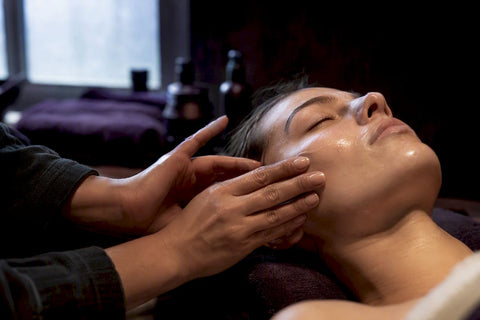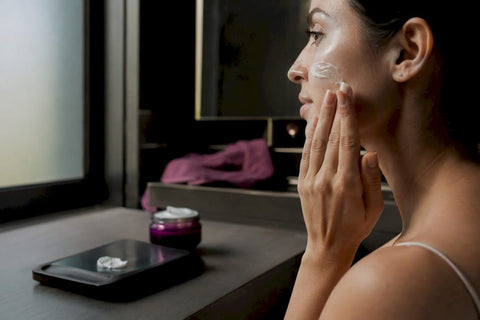
The simplest fix for combination skin is a barrier-preserving Korean layering routine that treats your T-zone and cheeks as two different skin types living on one face. Morning routines should stay light: a hydrating cleanse, a gel-based moisturizer, and sunscreen. Evenings call for a proper double cleanse, targeted actives where you actually need them, and richer hydration on the areas that run dry.
Two things make this work. First, pH-balanced cleansing preserves your skin barrier instead of stripping it, which stops the oily zones from overproducing sebum to compensate. Second, zone-targeting means you stop applying the same product everywhere and start matching texture to need.
- Morning: lightweight hydration plus sunscreen, no exceptions.
- Evening: double cleanse, targeted treatment, then moisturize by zone.
- Product picks and Lunarashopping bundles that map to each step come later in this guide.
At Lunarashopping, we’ve built our product curation around this exact logic, and it shows up in every routine we recommend below.
Key Takeaways
Combination skin improves fastest when you repair the barrier with pH-balanced cleansing and apply lighter or richer textures by zone instead of treating the whole face the same way.
| Point | Details |
|---|---|
| Cleanse at the right pH | Use cleansers in the 4.5 to 5.5 range to protect the acid mantle and prevent rebound oiliness. |
| Target actives by zone | Apply BHA to the T-zone, save AHAs for dry patches, and use niacinamide across the full face. |
| Moisturize with two textures | Use gel moisturizer on oily areas and press a ceramide-rich cream into dry cheeks. |
| Never skip sunscreen | Choose fluid or essence-type SPF with PA+++ so it layers cleanly over serums. |
| Start with a tested bundle | Lunarashopping’s Morning Face Care Routine Set and Complete Face Care Bundle map directly to this routine’s steps. |
Table of Contents
- Your Korean Skincare Combination Skin Routine, Step by Step
- How Do You Double Cleanse Without Stripping Combination Skin?
- Where Should You Use BHA, AHA, Niacinamide, and Retinoids?
- Which Moisturizer Textures Work Best for Combination Skin?
- What Sunscreen Works Best Under Layered Korean Routines?
- How Do You Map and Adjust Your Combination Skin Zones?
- Do Korean Sheet Masks Work for Combination Skin?
- How Do You Deal With Blackheads and Enlarged Pores on Combination Skin?
- Which Ingredients Should Combination Skin Avoid in Korean Products?
- Sources
Your Korean Skincare Combination Skin Routine, Step by Step
A workable korean skincare combination skin routine doesn’t need fifteen steps. It needs the right steps in the right order, done consistently.
Morning routine:
- Rinse with lukewarm water or a low-pH gel cleanser to remove overnight sweat and product residue.
- Apply a hydrating toner or essence with a patting motion, focusing extra passes on the cheeks.
- Use a lightweight, gel-based moisturizer across the whole face, then press a slightly richer cream into dry patches only.
- Finish with a fluid or essence-type sunscreen. This step never gets skipped.
Evening routine:
- Start with an oil cleanser to break down sunscreen, sebum, and makeup.
- Follow with a low-pH, gel or foam water-based cleanser to rinse away any oily residue.
- On exfoliation nights (two to three times weekly), apply a BHA or AHA to pore-prone areas before your essence.
- Layer a hydrating essence, then a treatment serum (niacinamide, retinoid, or targeted spot treatment).
- Moisturize by zone, gel on the T-zone, cream on the cheeks.
If your skin runs sensitive one week and oily the next, alternate exfoliation nights with a plain hydrating essence night instead of pushing through.
Pro Tip: Keep one “recovery night” per week with zero actives, just cleanser, essence, and moisturizer. Combination skin flares fastest when every night is a treatment night.
How Do You Double Cleanse Without Stripping Combination Skin?
Double cleansing works because oil cleansers dissolve sebum and sunscreen far more effectively than water-based formulas alone, and doing so without over-drying depends on what you use second.
Look for a cleanser in the 4.5 to 5.5 pH range. Anything higher disrupts your acid mantle, the thin, slightly acidic film that keeps moisture in and irritants out. Dermatologists consistently flag over-mattifying formulas as a mistake for combination skin, since stripping the whole face equally punishes the cheeks for what the T-zone is doing.
A few practical notes on texture and technique:
- Choose a light cleansing oil or balm for step one, massaged in dry for 60 seconds before adding water.
- Follow with a low-pH gel cleanser on normal days, or a foaming version only if your T-zone feels congested.
- Cleanse your T-zone slightly more thoroughly (a second pass with the water cleanser) while going lighter and faster over the cheeks.
- Skip hot water. It accelerates transepidermal water loss on already-dry areas.
Reading a cleanser’s pH before buying matters more than most shoppers realize; you can dig into the science behind low-pH Korean cleansers if you want the full explanation.
Where Should You Use BHA, AHA, Niacinamide, and Retinoids?
Combination skin doesn’t need every active applied everywhere. It needs the right active in the right zone.
BHA (salicylic acid) works best applied directly to the T-zone and any other pore-prone patches, since it’s oil-soluble and gets into congested pores more efficiently than it helps dry cheeks. Two to three nights a week is a reasonable starting frequency for most people. If breakouts concentrate around the nose and chin, our guide on Korean acne care best practices covers spot-application in more detail.
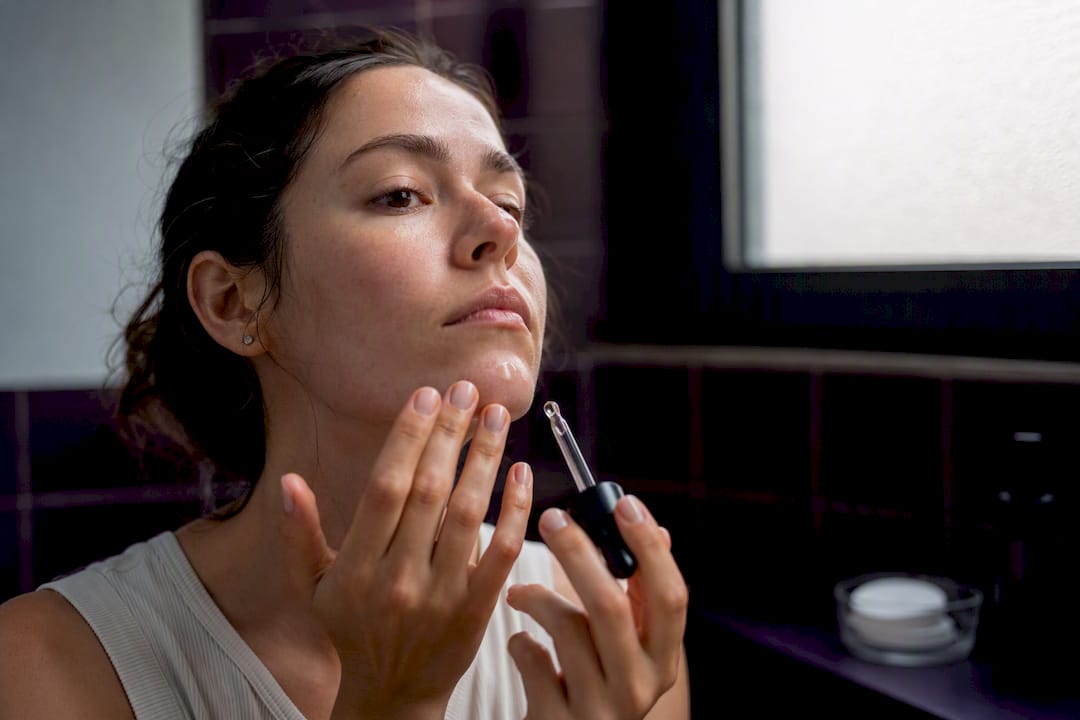
AHAs or PHAs suit drier patches better, since they work on the skin’s surface rather than inside the pore. Spot-apply on rough, dull cheek areas or alternate nights with your BHA rather than stacking both everywhere at once.
Niacinamide is one of the few actives that genuinely works double duty, supporting barrier function while helping regulate sebum at moderate concentrations (typically 2 to 5 percent). It layers easily under moisturizer and rarely causes irritation, which makes it a reasonable everyday addition for most combination skin types.
Retinoids need a slow ramp-up: two nights a week for the first two to three weeks, increasing gradually as tolerance builds. Never layer a retinoid with a strong acid on the same night. Dermatology guidance on introducing multiple actives recommends staggering acids and retinoids across different nights while keeping a consistent hydrating essence in the routine to support the barrier as those actives work.
Pro Tip: Patch-test any new active on your jawline for three nights before adding it to your full routine. Combination skin often reacts differently on the neck-adjacent jaw than it does mid-cheek.
- BHA: T-zone, pore-prone areas, 2 to 3 nights weekly.
- AHA/PHA: dry, rough patches, spot-applied or alternated with BHA.
- Niacinamide: full face, most nights, moderate concentration.
- Retinoid: full face, gradual ramp-up, never same night as strong acids.
Which Moisturizer Textures Work Best for Combination Skin?
The texture you choose matters more than the ingredient list for combination skin, because a heavy cream that suits your cheeks will almost certainly clog your T-zone by noon.
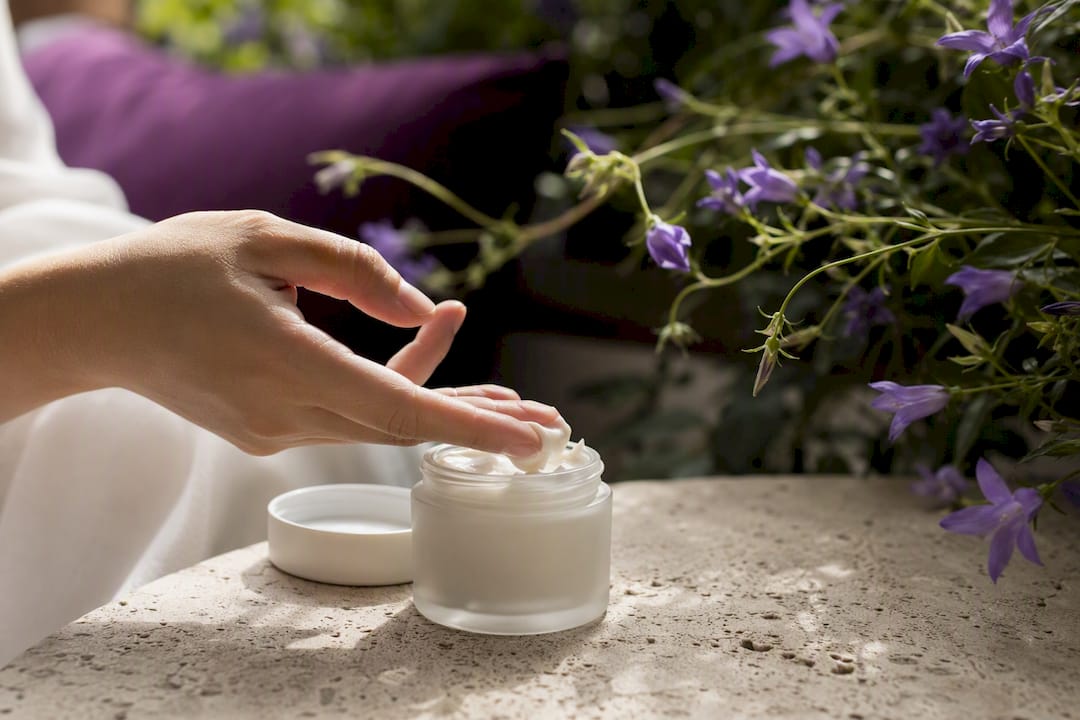
Whipped and gel-like moisturizer textures deliver real hydration to dry areas while staying light enough not to feel greasy once layered under sunscreen and makeup. Ceramides and hyaluronic acid are the two ingredients worth prioritizing, since ceramides rebuild the lipid barrier directly and hyaluronic acid pulls in water without adding oil.
Multi-moisturizing is the actual technique behind zone-targeting: instead of buying two separate full-face products, apply a thin layer of gel moisturizer everywhere first, then press a slightly richer cream into the cheeks, jawline, and any flaky patches while the gel is still tacky. Blend the boundary with your fingertips using light patting motions rather than dragging strokes, which prevents visible product buildup at the edges.
- Avoid heavy mineral oils and waxes on the T-zone if you’re prone to congestion.
- An occlusive (like petrolatum-based balm) belongs only on the driest patches, and usually only in cold weather.
- Ceramide-rich creams work well spot-applied rather than full-face.
- Gel or “aqua” textures are the safest full-face base for most combination skin.
What Sunscreen Works Best Under Layered Korean Routines?
Sunscreen is the step combination skin sufferers skip most, usually because they assume it will make the T-zone worse. The right texture solves that.
Fluid and essence-type sunscreens layer over serums and moisturizer without pilling, and they matter enough that Korean skincare’s emphasis on hydration and daily sun protection shows up consistently across editorial testing. Check both the SPF number and the PA rating (PA+++ or higher for daily UVA protection) rather than SPF alone.
For reapplication without disturbing makeup, a compact sunscreen or a setting mist works better midday than trying to rub in more fluid formula over foundation. Our breakdown of Korean sunscreen textures walks through which formulas reapply cleanest.
- Choose fluid, essence, or gel-cream sunscreens over thick lotions if you have any oiliness.
- Look for PA+++ or PA++++ alongside SPF 30 or higher.
- Reapply with a compact or spray formula at midday rather than a heavy cream version.
- Avoid alcohol-heavy “matte” sunscreens if your cheeks tend toward dry or flaky, since they exaggerate that dryness.
How Do You Map and Adjust Your Combination Skin Zones?
Start by mapping your face honestly. Most people’s T-zone (forehead, nose, chin) runs oilier and more pore-prone, while the cheeks and jawline run drier and more reactive. Zone-targeting, applying lighter products where you’re oily and richer ones where you’re dry, is the practical backbone of every routine in this guide.
- Cleanse and let your skin sit bare for 20 minutes; note where shine returns first and where tightness appears.
- Apply lighter, oil-controlling products (gels, fluids) to the zones that showed shine.
- Apply richer, ceramide-heavy creams to the zones that felt tight or looked dull.
- Blend product boundaries with a light patting motion, never dragging, to avoid visible lines of product buildup.
Seasons shift this map. In winter, most people need to add a thin occlusive layer over the cheeks first. In summer or during a breakout flare, cut back the T-zone’s richer products first and increase BHA frequency slightly before touching anything else.
Pro Tip: Redo your 20 minute bare-skin test every season. Combination patterns shift enough between winter and summer that a routine built in January often needs real changes by July.
Do Korean Sheet Masks Work for Combination Skin?
Sheet masks are one of the few Korean skincare category products flexible enough to serve both zones at once, but only if you choose formulas by ingredient rather than by brand hype.
For combination skin, hydrating sheet masks built around hyaluronic acid or centella asiatica tend to work better than heavily “brightening” or highly fragranced options, since the goal is calming both zones rather than adding another active layer. Apply the mask as directed (usually 15 to 20 minutes), then pat in the leftover essence rather than rinsing it off. That leftover serum is often the most concentrated part of the product.
A few practical rules make sheet masks more useful for mixed skin:
- Use once or twice weekly rather than daily; overuse can leave the T-zone feeling waterlogged and more prone to breakouts.
- Choose calming or hydrating formulas over exfoliating sheet masks, which are better as spot treatments than full-face use.
- If your T-zone feels overloaded after masking, blot lightly with a tissue before applying moisturizer rather than skipping moisturizer entirely.
- Store masks in the refrigerator during warmer months; the cooling effect helps calm any T-zone inflammation from the day.
Sheet masks won’t replace a real barrier-repair routine, but as a weekly reset they’re one of the lowest-effort tools combination skin has.
How Do You Deal With Blackheads and Enlarged Pores on Combination Skin?
Blackheads and enlarged pores concentrate almost entirely in the T-zone for combination skin, which means treating your whole face the same way usually backfires: over-exfoliate the cheeks trying to fix the nose, and you get flaking without actually shrinking a single pore.
BHA remains the most consistently useful tool here because it’s oil-soluble and works inside the pore lining itself, not just on the surface. Applied two to three times weekly directly to the nose, chin, and forehead, it helps clear the debris that stretches pores out over time. Clay masks used once weekly on the T-zone only can supplement this by absorbing surface oil, but they shouldn’t touch the cheeks.
A few things to stop doing if pores are your main frustration:
- Skip pore strips. They remove surface debris but don’t address what’s causing the pore to look enlarged, and repeated use can irritate the surrounding skin.
- Don’t switch to a stronger cleanser to “deep clean” pores; that usually triggers more oil production, not less.
- Keep niacinamide in your routine long term. Consistent, moderate-concentration use over weeks tends to improve pore appearance more reliably than any single treatment.
- Never skip moisturizer on the T-zone out of fear of clogging pores. Dehydrated oily skin often produces more sebum, not less.
Which Ingredients Should Combination Skin Avoid in Korean Products?
Not every popular Korean skincare ingredient suits combination skin, and a few common formulation choices actively work against the barrier-first approach this routine depends on.
High-alcohol “mattifying” toners are the biggest offender. They deliver an immediate matte finish on the T-zone but dehydrate the cheeks fast, often triggering the exact rebound oiliness you’re trying to avoid. Heavy mineral oil and waxy occlusives in full-face moisturizers cause the opposite problem: fine for cheeks, but a fast track to congestion when applied across the nose and chin.
Watch for these formulation red flags on ingredient lists:
- Denatured alcohol (listed high on the ingredient list, not as a minor preservative) in toners and mists.
- Coconut oil or heavy butters in a “one moisturizer fits all” full-face product.
- Fragrance concentrations high enough to cause tightness or flushing on the cheeks specifically.
- Overly acidic exfoliating toners used daily rather than a few times weekly, which push cleansing pH well outside the 4.5 to 5.5 range that protects the acid mantle.
If a product claims to be “oil-free” and “hydrating” at once, check the actual ingredient order. That combination is achievable, but only with the right humectants and gel bases, not with marketing language alone.
Why Lunara Prioritizes Barrier Repair Over Mattifying
Curating Korean skincare for combination skin taught us something the industry doesn’t say loudly enough: the products that promise the fastest shine control are usually the ones that make cheeks worse within a month. That’s why Lunarashopping’s editorial approach leans on barrier repair first, zone-targeting second, and mattifying almost never as a standalone goal.
This isn’t a contrarian stance so much as a return to what dermatologists like Dr. David Kim have been saying for years: a well-functioning barrier regulates oil production more reliably than a surfactant ever will. Our own product selection, and the routines built around it, reflect that principle rather than chasing whatever ingredient trend is loudest this year.
— Lunara
Turnkey Bundles Built Around This Exact Routine
If mapping your own zone-targeted routine from scratch feels like more decision-making than you want to do this week, Lunarashopping built two bundles specifically around the steps covered above.
The Morning Face Care Routine Set covers exactly the morning sequence outlined earlier: a gentle cleanser, hydrating essence, gel moisturizer, and sunscreen, sized so you’re not guessing which product goes where. For evenings, the LUNARA Complete Face Care Bundle pairs a cleansing oil with a low-pH water cleanser and both a lighter gel and richer cream moisturizer, so zone-targeting is built into the bundle rather than something you have to piece together across five different brands. Press the richer cream into your cheeks, keep the gel for your T-zone, and use the included cleanser pair for your nightly double cleanse.
For readers who prefer to build a kit around specific concerns, like adding a dedicated exfoliating foam or swapping in a different sunscreen texture, the full face care collection and the custom skincare kit builder let you customize piece by piece. If you want a lightweight mist for midday reapplication over makeup, the QAI Tiger Moisture Mist is worth adding to your bag for exactly that purpose. Start with either bundle this week and adjust from there once you see how your own zones respond.
Sources
Recommended
- Korean Skin Care Regimen: A Practical Step-by-Step Guide – Lunara Cosmetics
- 10 Step Korean Skincare Routine: Master It in 2026 – Lunara Cosmetics
- The Ultimate Guide to Layering Your Skincare Routine (With Korean Beau – Lunara Cosmetics
- Korean Acne Care Best Practices for Clear Skin – Lunara Cosmetics