Centella and heartleaf are two different plants, and both show up in Korean toners, serums, creams and masks that promise calmer skin. In short: centella is the better first pick when your skin feels sensitive, dry or barrier-damaged. Heartleaf is the better first pick when your skin is oily, congested and easily irritated. You can use both, and this guide explains how to decide, what the evidence supports, and what to check on the label before you buy.
TL;DR
- Centella and cica are the same plant (Centella asiatica). Heartleaf is a different plant (Houttuynia cordata).
- Choose centella for sensitive, dry, reactive or eczema-prone skin. Choose heartleaf for oil, congestion and breakout-prone skin that still gets irritated easily.
- The research on both is promising but early. Neither one is a proven acne or redness treatment, and the finished formula matters more than the plant name on the front.
- You can layer them or use them in the same product. Add one new product at a time and patch test first.
- For persistent redness, rashes or suspected rosacea, see a board-certified dermatologist.
Table of Contents
- Are centella, cica and heartleaf the same thing?
- What each ingredient does for skin
- Centella vs heartleaf at a glance
- Which should you choose?
- Can you use centella and heartleaf together?
- How to read the label and avoid irritation
- Does the evidence say one is better?
- Our perspective
- Shop calming Korean skincare
- FAQ
- Sources
Are centella, cica and heartleaf the same thing?
Centella and cica are the same ingredient. A 2022 peer-reviewed review of cica in skincare formulations identifies cica as Centella asiatica. You may also see it called gotu kola, tiger grass, or “CICA” on Korean packaging, and “Centella Asiatica Extract,” “Madecassoside” or “Asiaticoside” in an ingredient list.
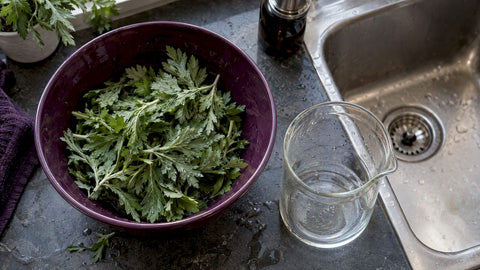
Heartleaf is something else. It is Houttuynia cordata, a leafy plant used in traditional medicine across parts of Asia. On a label it can appear as leaf extract, water, powder or a fermented extract, and these forms do not behave identically.

So when someone searches “cica vs heartleaf,” the question is the same as centella vs heartleaf: two botanicals, two sets of strengths, one shelf.
What each ingredient does for skin
Centella: soothing and barrier support
Centella’s active compounds are triterpenes: asiaticoside, madecassoside, asiatic acid and madecassic acid. Preclinical research on Centella asiatica and skin documents anti-inflammatory, antioxidant and collagen-stimulating potential for these compounds. A 2026 review in the Journal of Integrative Dermatology points to potential benefits for scarring and wound healing, based on preclinical and early clinical data.
In practice, centella is usually positioned for sensitive, damaged or eczema-prone skin, as Cleveland Clinic’s overview of centella for skin describes. The same page notes that its popularity rests on centuries of anecdotal use while clinical dermatology research catches up. That is the honest summary: a long track record, a decent mechanistic story, and a modest amount of controlled human data.
Heartleaf: a targeted calmer for oily, reactive skin
Heartleaf has a strong reputation in K-beauty for redness, oil and blemish-prone skin. The research is thinner. A 2025 in vitro study of Houttuynia cordata essential oil suggests antimicrobial and anti-inflammatory properties that could be relevant to acne-focused cosmetics. The authors also say more work is needed on loading, skin permeation and confirming efficacy in living skin.
In plain terms, heartleaf looks plausible in the lab, but you should not read a heartleaf label as a promise of clearer skin.
Centella vs heartleaf at a glance
| Centella (cica) | Heartleaf | |
|---|---|---|
| Plant | Centella asiatica | Houttuynia cordata |
| Best known for | Soothing, barrier support, post-irritation recovery | Calming redness, oil and congestion |
| Skin types it is usually chosen for | Sensitive, dry, reactive, eczema-prone | Oily, combination, breakout-prone |
| Typical feel | Slightly cushiony, sometimes a light film | Light, watery, fresh |
| Evidence | Preclinical plus some small human studies | Mostly laboratory and early research |
| Common formats | Creams, ampoules, serums, sheet masks | Toners, essences, pads, cleansers |
The feel difference matters more than it sounds. Heartleaf products tend to be thin and watery. Centella products often leave a gentle, slightly elastic finish. If texture is the reason you abandon routines, let it guide you.
Which should you choose?
Use your skin’s current state, not the trend, as the deciding factor.
Choose centella first if
- Your skin stings when you apply ordinary products.
- It feels tight, flaky or rough after cleansing.
- You are recovering from over-exfoliating or a harsh active.
- You have a history of eczema-prone dryness (talk to your dermatologist about treatment, and use centella as supportive care).
Two of our related guides go deeper: what centella asiatica actually does for skin and how centella calms sensitive, reactive skin.
Choose heartleaf first if
- Your T-zone gets shiny by midday.
- You get occasional clogged pores or small breakouts but cannot tolerate strong acne products.
- You want a light toner step that feels refreshing rather than rich.
Our guide to heartleaf benefits in K-beauty covers what the ingredient is used for in more detail.
If you are not sure
Start with centella. It is the gentler default for most people, and a calm barrier makes every other product in your routine easier to tolerate. If your skin is also oily, add a heartleaf toner afterward and see how it responds.
Can you use centella and heartleaf together?
Yes. We are not aware of any broad incompatibility between the two. They can sit in the same formula or in separate layers, such as a heartleaf toner followed by a centella cream.
Two cautions apply:
- Do not expect double the effect. Layering two soothing botanicals does not guarantee twice the calm. If your skin is already comfortable, a third soothing product adds little.
- Introduce one product at a time. If you add a heartleaf toner and a centella serum on the same day and your skin reacts, you will not know which one caused it. Wait a week or two between additions.
A simple order for a calming routine looks like this:
- Cleanse with a gentle, low-foam cleanser.
- Tone with a heartleaf toner if your skin is oily, or skip this step if you are dry.
- Treat with a centella serum or ampoule.
- Moisturize with a centella cream.
- Protect with sunscreen in the morning.
What about mixing centella with actives like retinoids or exfoliating acids? Centella is generally treated as a supportive ingredient, but irritation usually comes from the active, not from centella. If you use a strong active, introduce it separately, start slowly, and ask a dermatologist if your skin is reactive. If you are weighing gentler options for the active step, this comparison of retinol and bakuchiol compared in a 12-week look shows how ingredient evidence can be weighed side by side.
How to read the label and avoid irritation
The plant name on the front of the bottle tells you less than you would hope. Extracts differ by plant part, solvent, processing and concentration, and the rest of the formula changes how the product feels and performs. A “cica” cream from one brand is not equivalent to a “cica” cream from another.
Check these before buying:
- Where the botanical sits in the ingredient list. Higher up usually means more of it. A percentage on the box is not the whole story.
- Fragrance and essential oils. These are common irritants for reactive skin. Our guide to choosing fragrance-free skincare for sensitive skin explains what to look for.
- The supporting cast. Humectants like glycerin and hyaluronic acid, plus ceramides and panthenol, make a calming product feel better in use.
- The format. Toners and pads suit oily skin. Creams suit dry or damaged skin.
Patch test every new product
Any ingredient, including a natural one, can cause allergic contact dermatitis with redness, itching and swelling. The American Academy of Dermatology recommends that you test a new skincare product on a small area: apply a quarter-sized amount to the underside of your arm or the bend of your elbow twice a day for seven to 10 days. If the spot stays clear, you can move on to your face.
If you have persistent redness, burning, or flushing with bumps, that can point to something like rosacea rather than simple sensitivity. See a dermatologist for diagnosis. Our guides on Korean skincare for rosacea-prone skin and what a sensitive skin type looks like can help you prepare for that conversation. For clinic-based options, this overview of customizing treatment plans for sensitive skin shows what a professional approach can involve.
Does the evidence say one is better?
Neither wins outright. Centella has the longer research record, including anti-inflammatory and wound-healing work and some small human studies, mostly in specific finished formulas. Heartleaf has plausible laboratory results but far less direct clinical data on skin. Neither ingredient is an acne drug, and neither diagnoses or treats redness on its own.

That should shape how you shop. Treat both as supportive ingredients in a well-built routine, not as cures. Judge a product by how your skin responds over a few weeks, not by the botanical headline.
Our perspective
We stock Korean skincare for people who want results without a ten-step routine, and we see the same pattern in what shoppers ask us. Most people with sensitive or easily irritated skin do better when they stop adding and start simplifying. That is why we lean toward centella as a first step: a calm barrier makes everything else work better.
Heartleaf earns its place for oilier skin that still reacts. We would choose a light heartleaf toner over a harsh clarifying product for that skin type every time, because the goal is a fresh, clarified finish without a tight, stripped feeling.
We also care about being straight with you. The research on both plants is promising but not conclusive, and we would rather you buy a well-formulated, fragrance-conscious product you will use daily than chase a percentage on a label. Choose by skin type, patch test, and give a product a few weeks.
— Lunara
Shop calming Korean skincare
If you are ready to build a gentle routine, start with the category that matches your next step. Browse face toners and mists for a light heartleaf-style step, face creams and moisturizers for centella-focused comfort, or face masks for a weekly soothing boost. Flat rate standard shipping starts from $6.49. Get It Now and see the full face care range.
FAQ
Are heartleaf and centella the same?
No. Centella is Centella asiatica, also called cica, and heartleaf is Houttuynia cordata. They are unrelated plants with different active compounds, and they are usually chosen for different skin types. Centella leans toward sensitive and dry skin, heartleaf toward oily and congested skin.
Do dermatologists recommend centella?
Centella is widely used in skincare and is discussed by dermatology-focused sources as a soothing ingredient for sensitive or damaged skin. Cleveland Clinic notes that its popularity rests on long traditional use while clinical research continues to develop. A dermatologist can tell you whether it fits your specific skin condition.
Do Koreans use centella?
Yes. Centella, labeled “cica,” is one of the most recognizable ingredients in Korean skincare, appearing in creams, ampoules, pads and masks. Heartleaf is also common, especially in toners and cleansers.
What should not be mixed with centella?
There is no well-established list of ingredients that cannot be used with centella. Problems usually come from strong actives such as retinoids or exfoliating acids, not from centella itself. Introduce one new product at a time, patch test, and stop if you notice burning, stinging or a rash.
Sources
- Role of Cica (Centella asiatica) in Skincare Formulations
- Pharmacological Effects of Centella asiatica on Skin
- A review of the dermatologic activity and applications of Centella asiatica
- In vitro bioactivities and formulation stability of Houttuynia cordata essential oil
- Skin Care Benefits of Centella Asiatica, Cleveland Clinic
- How to test skin care products, American Academy of Dermatology