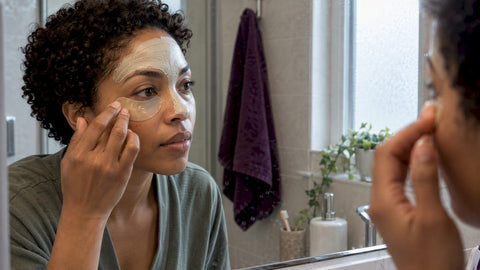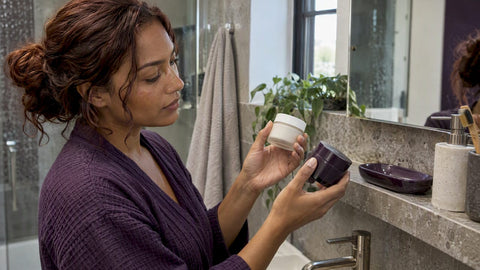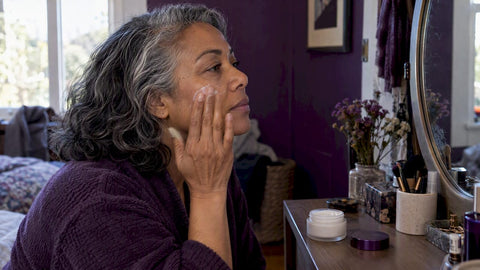
K-beauty suits menopausal skin because it starts where menopausal skin needs help: a gentle cleanse, several light layers of hydration, barrier-supporting moisturizer and daily sun protection. It will not reverse the hormonal shift behind your skin changes. It can make dry, tight, reactive skin feel and look noticeably more comfortable. This guide explains what is happening to your skin, which parts of a Korean routine fit, what to skip, and how to build a routine you can keep.
TL;DR
- Falling estrogen thins skin, slows collagen production and reduces oil, so menopausal skin is drier, less elastic and more reactive.
- K-beauty’s barrier-first, layered-hydration approach fits these changes better than aggressive peels and scrubs.
- A simple routine works best: gentle cleanser, hydrating toner, serum, rich moisturizer and SPF 30 or higher every morning.
- K-beauty supports comfort and barrier health. It does not replace sunscreen, retinoids or a conversation with your doctor about hormone therapy.
- If your skin stings or turns red, pause the actives and go back to cleanser, moisturizer and SPF until it settles.
Table of Contents
- What menopause does to your skin
- Why K-beauty fits menopausal skin
- What K-beauty can and cannot do
- A K-beauty routine for menopausal skin
- Ingredients worth looking for
- Mistakes to avoid
- Building your routine by concern
- Our perspective
- Shop a gentle starter routine
- FAQ
- Sources
What menopause does to your skin
The skin is an estrogen-responsive organ. Estrogen influences keratinocytes, fibroblasts, melanocytes, hair follicles and oil glands, so when levels fall after menopause, the effects show up everywhere on the skin at once.
The most cited figure is collagen. A systematic review and meta-analysis reports that women lose roughly 30% of skin collagen in the first five years after menopause, then about 2% a year after that. Less collagen means thinner, less elastic skin. The same loss reduces the glycosaminoglycans that help skin hold water, which is one reason dryness is so common.
A 2025 narrative review on managing menopausal skin changes describes the same picture: decreased collagen production, reduced elasticity and moisture loss, resulting in dryness and wrinkling. Oil production also drops, and cell turnover slows, according to JumpstartMD’s overview of menopausal dry skin.
In daily life, that tends to look like this:
- Skin that feels tight after cleansing, even with products that never bothered you before
- Itchiness, especially on the body and shins
- Fine lines that look deeper when skin is dehydrated
- More redness or stinging from products you used to tolerate
- Dullness, and in some people more uneven tone
This is not simply “getting older”. It is a specific shift, and it explains why the routine that worked at 35 can start to backfire at 50.
Why K-beauty fits menopausal skin
Three ideas in Korean skincare line up with what menopausal skin needs.
Barrier first
A weakened barrier loses water faster and reacts to more things. K-beauty tends to prioritize gentle cleansing, soothing ingredients and moisturizers that rebuild the barrier, rather than chasing results with strong acids. ChokChok’s menopause guide makes the same point: this approach suits menopausal skin better than the high-concentration peels common in traditional Western anti-aging routines. If you want to see how we think about it, our piece on why gentle Korean formulas work so well covers the logic in more depth.

Layered hydration
Instead of one heavy cream, a Korean routine builds moisture in thin layers: toner, essence or serum, then moisturizer. Dermatologist Dr. Andrea Dale Maderal, quoted by UHealth Collective, points to hyaluronic acid and ceramide-based creams as helping lock in moisture, which matters most for the itchiness and thinning feeling of menopausal skin. Several light layers are also easier on sensitive skin than one thick product.

Soothing ingredients
Ingredients that appear again and again in Korean formulas suit this stage of life. According to ChokChok, the ones recognized for soothing, hydrating or collagen-supportive properties include centella asiatica for calming, ceramides for barrier repair, snail mucin for hydration and ginseng for circulation support. Treat these as supportive rather than miraculous: the evidence is stronger for ceramides and humectants like hyaluronic acid than for most botanicals.
What K-beauty can and cannot do
Marketing often promises more than any cosmetic can deliver. A dermatology-informed review summarized by Maple Menopause draws the line clearly: K-beauty products can make menopausal skin look and feel better through hydration and barrier protection, but they do not reverse the biological aging caused by estrogen withdrawal.
The American Academy of Dermatology lists the approaches with the strongest backing: daily broad-spectrum sunscreen of SPF 30 or higher, topical retinoids (or bakuchiol if your skin is very sensitive) and moisturizers with ceramides and hyaluronic acid. A Korean routine can cover the moisturizing and sunscreen parts well. Retinoids are an add-on you introduce slowly.
Hormone therapy is a separate, medical decision. Topical estriol, for example, is prescription-based and needs a clinical assessment. If your skin changes come with hot flashes, sleep problems or other symptoms, talk with your gynecologist or primary care clinician about whether hormone therapy is right for you. Skincare then becomes the supporting layer, not the whole plan.
A K-beauty routine for menopausal skin
The basic sequence is: gentle cream or low-foam cleanser, hydrating toner, peptide or niacinamide serum, rich moisturizer, then sunscreen in the morning. You do not need ten steps. Our 10-step routine guide shows the full version, and for midlife skin we recommend trimming it down. Our guide to building a K-beauty routine for mature skin walks through the same idea in more detail.
Morning
- Cleanse gently. Rinse with water alone or use a mild cleanser. Foaming formulas that leave skin squeaky strip oils your skin is already producing less of. If you prefer a gel, a low-pH formula like the COSRX Low pH Good Morning Gel Cleanser is a mild option to consider.
- Hydrating toner, two or three layers. Pat it on with clean hands onto skin that is still damp.
- Serum. Choose a hydrating, peptide or niacinamide serum rather than a strong acid.
- Moisturizer. Use a cream rich enough to seal in the layers beneath it.
- Sunscreen. SPF 30 or higher, broad spectrum, every day. This is the single most useful step for protecting the collagen you have left.
Evening
- Remove sunscreen and makeup. Use a gentle cleanser, and double cleanse only on days you wear heavy makeup or water-resistant sunscreen.
- Hydrating toner. Again, layer it on damp skin.
- Treatment, if you use one. This is where a retinoid or a gentle exfoliant goes, not both on the same night. More on that below.
- Serum or essence.
- Moisturizer. A little more generous than in the morning. Our Korean night routine fits into 10 to 15 minutes.
Once or twice a week
A sheet mask adds a concentrated hydration boost and feels good on a tired-skin day. Options like the MEDIHEAL Collagen Essential Mask or the JM SOLUTION Honey Luminous Royal Propolis Mask are easy ways to add that extra step without changing your whole routine. Do not expect a mask to rebuild collagen; think of it as a comfort and hydration treat.
Ingredients worth looking for
| Goal | Ingredients to look for | What to expect |
|---|---|---|
| Moisture retention | Hyaluronic acid, glycerin, snail mucin | Plumper, less tight skin within days when applied to damp skin |
| Barrier repair | Ceramides, petrolatum, fatty acids | Fewer stinging and itchy episodes over a few weeks |
| Calming redness | Centella asiatica | Calmer-looking skin |
| Firmness support | Peptides, niacinamide, retinoids or bakuchiol | Gradual, modest changes over months |
| Protection | Broad-spectrum SPF 30+ | Prevents further damage; does not undo existing damage |
One practical detail on hyaluronic acid: according to JumpstartMD, apply it to damp skin and seal it with a moisturizer right away. On dry skin in a dry climate it can draw water from deeper layers and leave you feeling drier. That is why Korean routines pat on toner first and follow quickly with cream.
Mistakes to avoid
Over-exfoliating
The AAD notes that menopausal skin is more reactive, and that strong scrubs and aggressive exfoliation can cause inflammation that speeds up signs of aging. Many K-beauty routines include acids, and it is easy to overdo them. If you want to exfoliate, start small. Our guide to barrier-first Korean exfoliation suggests starting once a week with a gentle product and watching how your skin responds.
Reading barrier damage as a bad product
Stinging, peeling or redness usually signals a stressed barrier, not a faulty formula. The AAD’s guidance is to scale back to cleanser, moisturizer and sunscreen until the skin recovers. If you are not sure where to begin, our barrier repair guide covers a two-to-four-week reset. See a board-certified dermatologist if irritation persists, spreads or comes with swelling or blistering.
Starting too many products at once
Introduce one new product at a time, about two weeks apart. If something reacts, you will know what it was.
Skipping sunscreen because the routine feels complete
Layered hydration does not replace SPF. Sunscreen remains the most effective daily step against collagen loss from sun exposure.
Building your routine by concern
If your main issue is dryness and itching
Put the weight on toner layers and a richer cream, and stop foaming cleansers. Our guides on Korean skincare for dry skin and on dehydrated skin go through the details. Do not forget the body: menopausal itch often shows up on arms and legs. A HealthPartners article on menopausal itchy skin notes that dryness is the usual cause and that regular moisturizing matters. Our body moisturizers and lip care cover those areas. Persistent itch that does not improve with moisturizing deserves a visit to your clinician.
If you are still breaking out
Acne does not always stop at menopause, and hormonal shifts can bring breakouts back. Choose gentle, non-stripping care; our Korean acne care practices explain how to treat blemishes without wrecking the barrier.
If you are in your 40s and perimenopausal
You may notice changes before periods stop. The same principles apply, and starting barrier-first early is easier than repairing later. If your skin is still resilient, our routine templates for your 30s show how to keep things simple, and you can add richness as dryness grows.
Our perspective
We see many shoppers who arrive with a long routine that no longer suits their skin. Our advice is nearly always to take things away first. Menopausal skin does not need more steps. It needs fewer irritants, more water held in the skin and a cream that actually seals it in.
We choose Korean products for gentle, effective formulas that work across skin types, and we think that matters most for skin that has become more reactive. We would rather you build a short routine you enjoy and use every day than a long one you abandon. Be realistic about results: expect softer, more comfortable, better-hydrated skin, and treat anything beyond that as a bonus. Let sunscreen, your dermatologist and your doctor handle the rest.
— Lunara
Shop a gentle starter routine
If you want to put this into practice, start with the basics. Browse our face creams and moisturizers, face toners and mists and face cleansers, or look through all face care products to find COSRX, Beauty of Joseon, ANUA and other Korean brands. The Morning Face Care Routine Set is a convenient way to begin. Standard shipping starts from $6.49. Get it now at Lunarashopping.
FAQ
Is Korean skincare good for menopausal skin?
Yes, mostly. Its emphasis on gentle cleansing, layered hydration and barrier support matches the dryness and sensitivity that many people notice in menopause. Choose gentle formulas, skip aggressive exfoliation and keep sunscreen in your routine.
What is the best Korean skincare routine for women over 50?
Keep it short: gentle cleanser, hydrating toner, a peptide or niacinamide serum, a rich moisturizer and SPF 30 or higher in the morning. At night, skip the SPF and consider adding a retinoid or bakuchiol slowly, starting two to three nights a week as the AAD suggests. Adjust for how your skin feels week to week.
Can K-beauty reverse menopausal skin aging?
No. Estrogen decline drives collagen loss, and cosmetics cannot reverse that. Hydrating and barrier-supporting products can improve how skin looks and feels, and daily sunscreen helps protect what remains. Ask your doctor about medical options if you want to address the cause.
Which ingredients should I look for?
Hyaluronic acid, glycerin and snail mucin for hydration, ceramides for barrier repair, centella for calming, and peptides or niacinamide for general support. Apply humectants to damp skin and seal them in with a moisturizer.
What should I do if my skin stings after starting a new routine?
Stop all active products and return to cleanser, moisturizer and sunscreen until the skin settles. Then reintroduce products one at a time. If redness or discomfort lasts, see a dermatologist.
Sources
- Estrogens and aging skin, PMC
- Skin Rejuvenation in Women using Menopausal Hormone Therapy: A Systematic Review and Meta-Analysis, PMC
- Managing Menopausal Skin Changes: A Narrative Review, PMC
- Caring for your skin in menopause, American Academy of Dermatology
- How to Care for Your Skin During Perimenopause, Menopause, UHealth Collective
- Dry Skin in Perimenopause and Menopause, JumpstartMD
- Menopause and K-Beauty, ChokChok
- K-Beauty After 45, Maple Menopause
- How to get relief from itchy skin during menopause, HealthPartners